Early battle maps in UEFN: desert and town ambience
I was also involved in some of the first battle royale battle maps Epic built in UEFN. Most of my ambience work on them was desert and town spaces.
The constraints were the same as on Ballistic, so the method carried over: careful volume placement, layered volumes and sympathetic crossfades (see the entry on working without geometry tools). The result held the same ambience quality bar as Fortnite Battle Royale.
TechniqueUEFNAmbienceVolumes
Ambient volumes without geometry tools
One of the tools we didn't have at the time was geometry, so we couldn't control the vertices of ambient volumes. The shapes were fixed, and everything had to be solved with where the volumes went and how they overlapped.
The approach
Careful placement. Each volume was positioned deliberately, because it couldn't be reshaped to fit the space afterwards.
Layering. Volumes were stacked and overlapped, so a larger volume could carry the wider space while smaller ones added local detail.
Sympathetic crossfades. Each fade between neighbouring volumes was chosen to suit the sounds on both sides of it, rather than one default fade for every border.
// Illustration — box volumes layered along a route, with a crossfade across each overlap
With that approach, we landed the same ambience quality bar as Fortnite Battle Royale on the early maps.
Case notesBallisticUEFNAmbience
Ballistic: landing ambience with a restricted toolset
Ballistic was one of the first Epic Games maps I was involved in. The job was to land the ambient audio in UEFN at Epic's quality bar, with a more restricted toolset than I was used to.
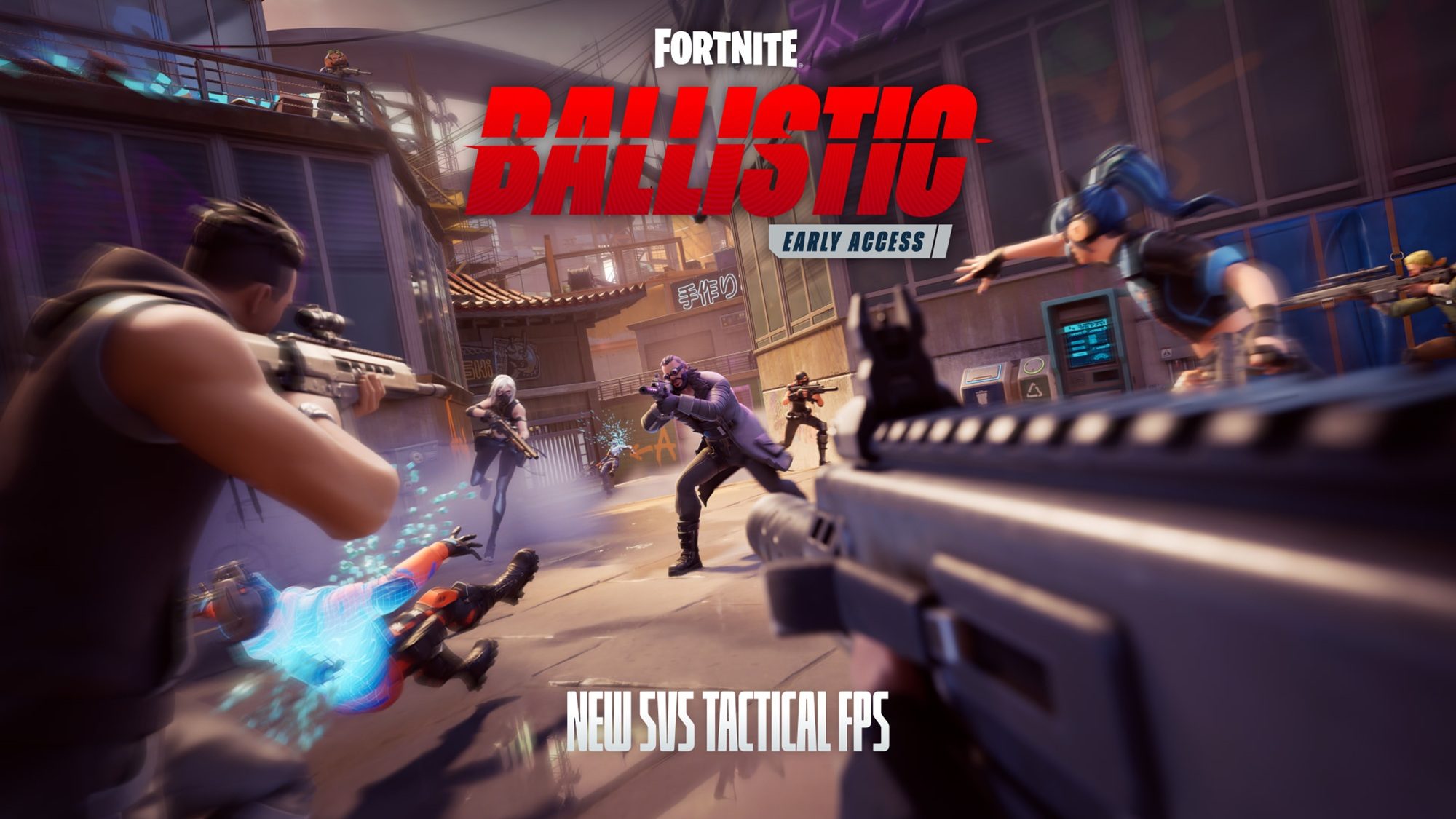
// Ballistic — key art
Getting content into UEFN
Our Fortnite ambient content was exposed to UEFN through plug-in directory inclusion. After a change, there was a delay of a couple of hours before the content was available in UEFN.
What that did to the work
That delay made instant decisions difficult. I couldn't change something and hear it straight away, so the work needed more planning than usual, with decisions made before the content went in rather than after hearing it in the editor.